
Helderberg Nature Reserve is our favourite place for a morning walk. It lies on the slopes of the Helderberg mountain, right above Somerset West. Its 402 hectares hold easy family loops, tough mountain climbs, lots of birds and some of the rarest plants in the Cape. Best of all, it's only about 11 minutes by car from Villa Helderberg. Here's everything you need to plan your visit.
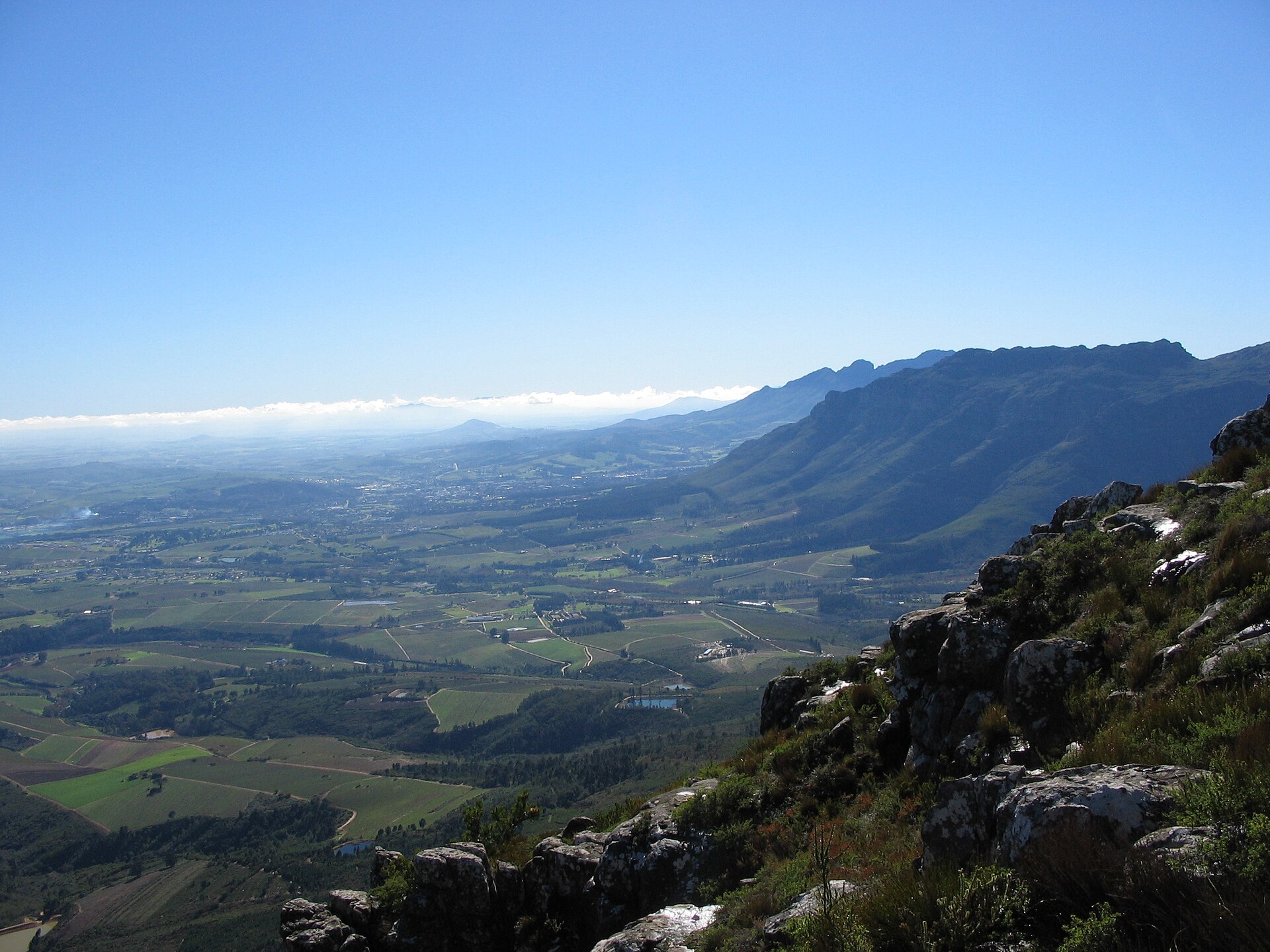
The view from the upper trails. Photo: Abu Shawka, CC0, via Wikimedia Commons.
Visiting Helderberg Nature Reserve: hours and fees
The entrance is at the top of Verster Avenue in Somerset West. Opening hours change with the seasons:
1 December to 28 February: 07:30 to 20:00
March and November: 07:30 to 19:00
1 April to 31 October: 07:30 to 17:30
At the time of writing, entry costs R30 for adults and R20 for children aged 3 to 17. Under-3s go free. Students and seniors over 60 pay R20, and there's also a R20 fee per vehicle. Locals can buy an annual membership with free entry. Check the latest details on the official day visitors page.
Check before you go
The reserve sometimes closes for a few days after storms or fires. For example, it closed briefly after the storms of May 2026. Please check the notices on the reserve's website or social media before you drive up.
Helderberg Nature Reserve hiking trails
The reserve has ten colour-coded trails. Each one gets a number for effort (1 is easy, 3 is strenuous) and a letter for exposure to heights (A is low, C is high). Here's a quick overview, based on the official trail guide.
Easy walks (grade 1)
Baboon Traverse (orange), 1A: 400 m, about 10 minutes. Perfect for small children.
Sugarbird Walk (yellow), 1A: 2.9 km, about 45 minutes. A gentle loop through the fynbos, and great for birds.
Caracal (black), 1B: 4.4 km, about 1 hour.
Moderate hikes (grade 2)
Protea (blue), 2A: 6.2 km, about 2 hours. Our pick for a first visit.
Watsonia (brown), 2A: 4 km one way, about 3 hours.
Leopard Loop (red), 2B: 8.2 km, about 3 hours.
Waboom (purple), 2B: 7 km, about 4.5 hours, via Disa Gorge.
Woodies Walk (green), 2B: about 5 hours, partly outside the reserve.
Mountain routes (grade 3)
West Peak (pink), 3C: about 7 hours to the top of the Helderberg.
The Dome (pink), 3C: about 8 hours.
These are only for fit, experienced hikers. Start early, and never go alone.
Want more walks nearby? See our guide to the best hikes in Somerset West and the Helderberg, or browse our hiking page.
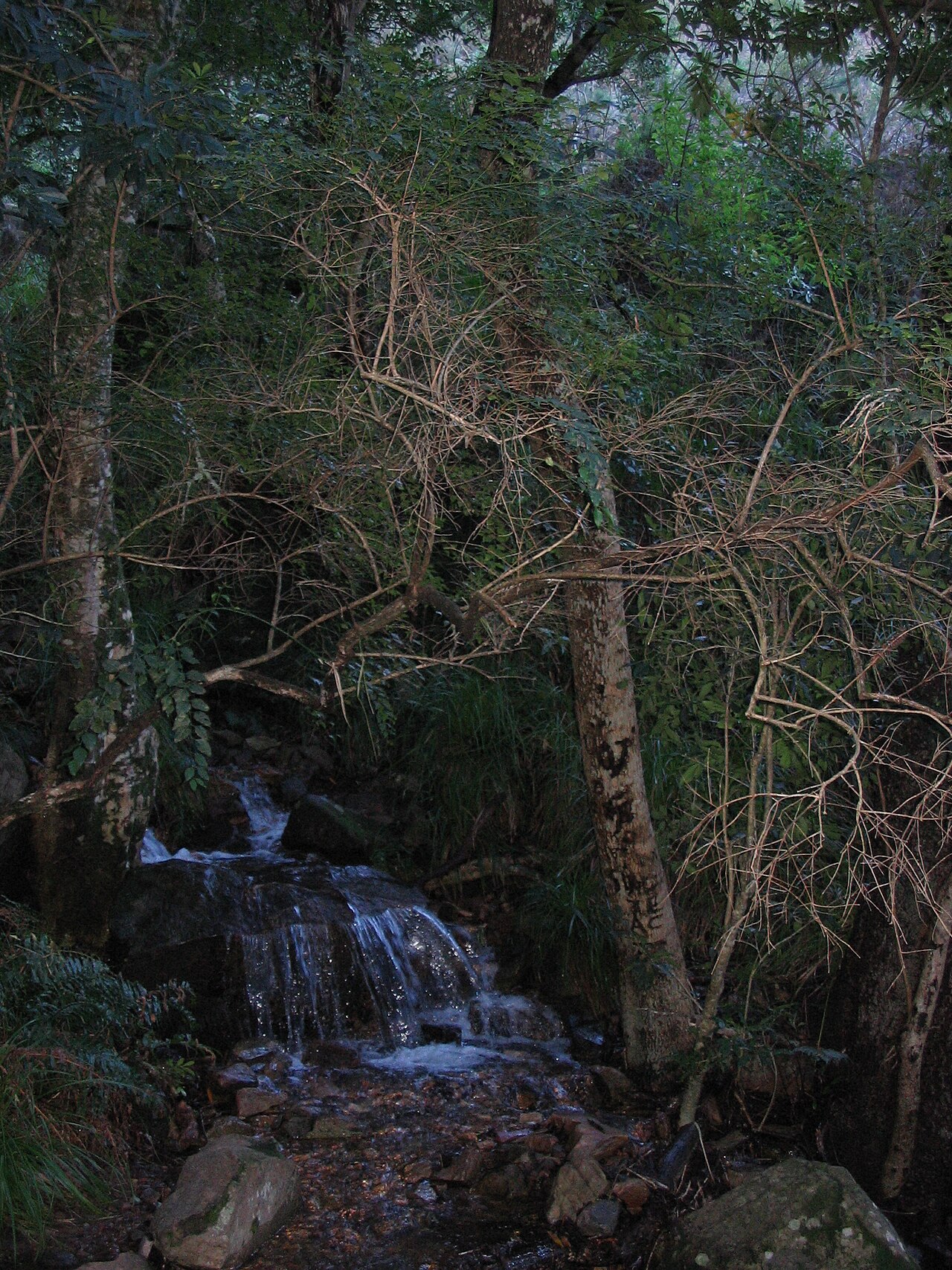
A cool forest stream on the higher trails. Photo: Abu Shawka, CC0, via Wikimedia Commons.
Fynbos, forest and flowers in Helderberg Nature Reserve
The plant life here is special. According to the City of Cape Town, the reserve protects critically endangered Swartland shale renosterveld and Kogelberg sandstone fynbos. There's also vulnerable Cape Winelands shale fynbos. In the deeper gorges, you walk through pockets of shady Afrotemperate forest.
The king protea, South Africa's national flower, is common across the reserve. In addition, you'll see pincushions, ericas and pink watsonias. Spring, from August to October, is the most colourful time. For more flower spots, read our Cape flowers and fynbos guide.
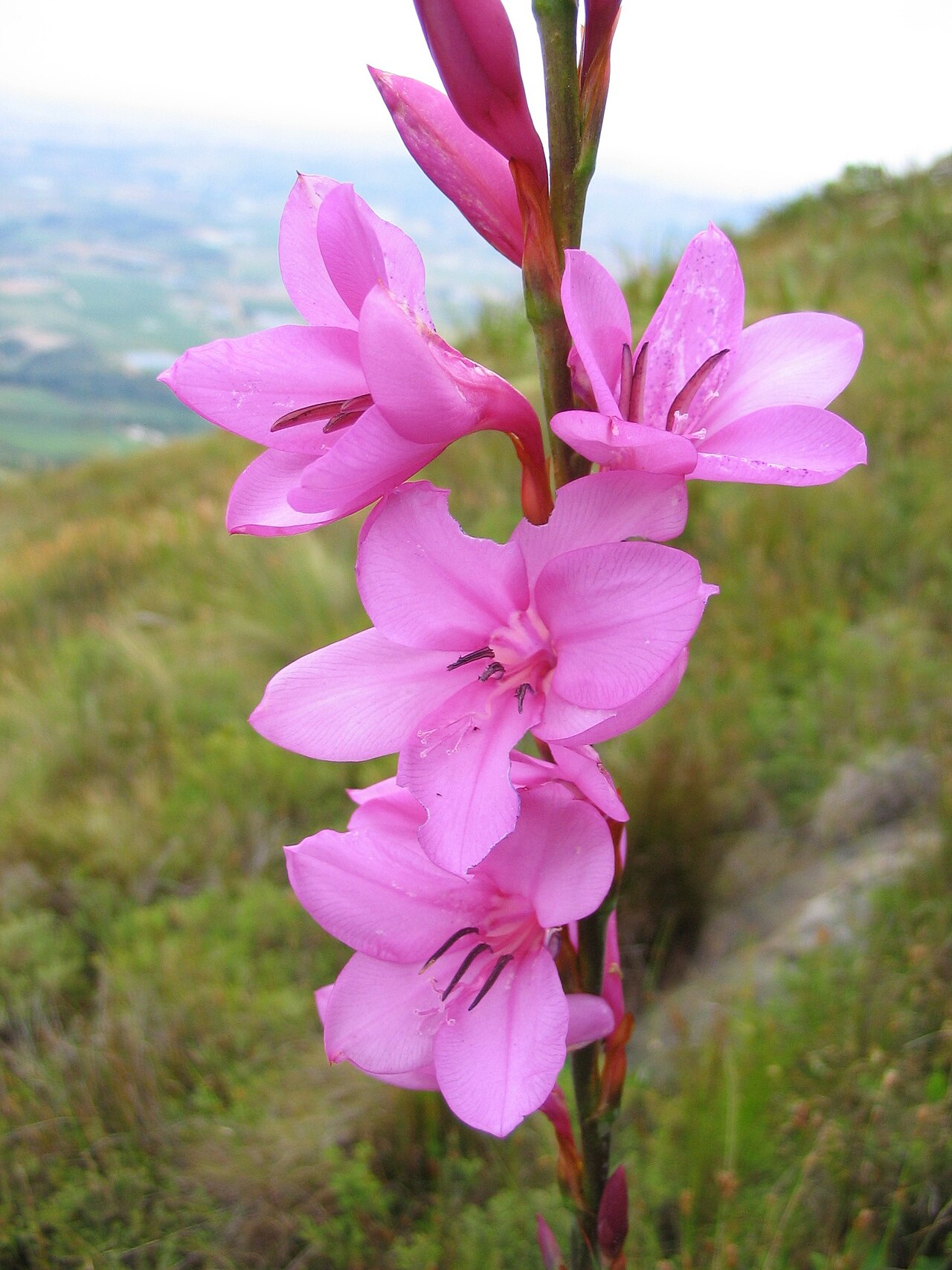
Pink watsonia in the reserve. Photo: Abu Shawka, CC0, via Wikimedia Commons.
Birds of Helderberg Nature Reserve
Birders love this reserve. The fynbos is full of nectar feeders. Look for the Cape sugarbird with its long tail, the orange-breasted sunbird and the malachite sunbird. Helmeted guineafowl and Egyptian geese often wander around the picnic lawns. Overhead, you may spot a jackal buzzard.
There's more if you look closely. Cape robin-chats, Cape white-eyes, Cape batis and speckled mousebirds live in the gardens and forest edges. Victorin's warbler hides in the wet gorges. The spotted eagle owl lives here too. Serious birders hike up to the cliffs to search for the Cape rockjumper. However, that's a demanding climb. Spring and winter are usually the best seasons.
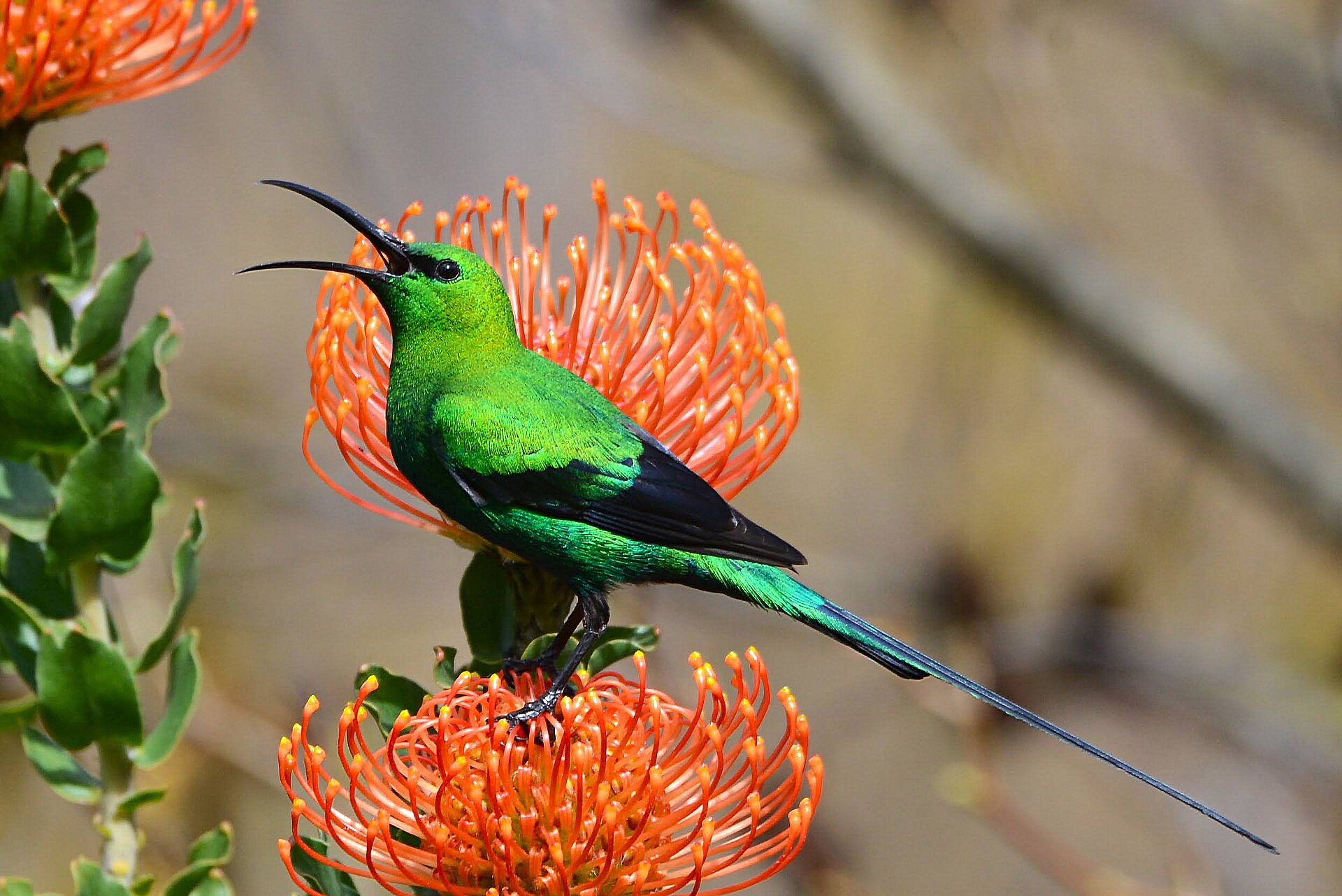
A malachite sunbird on a pincushion. Photo: Gouldingken, CC BY-SA 4.0, via Wikimedia Commons.
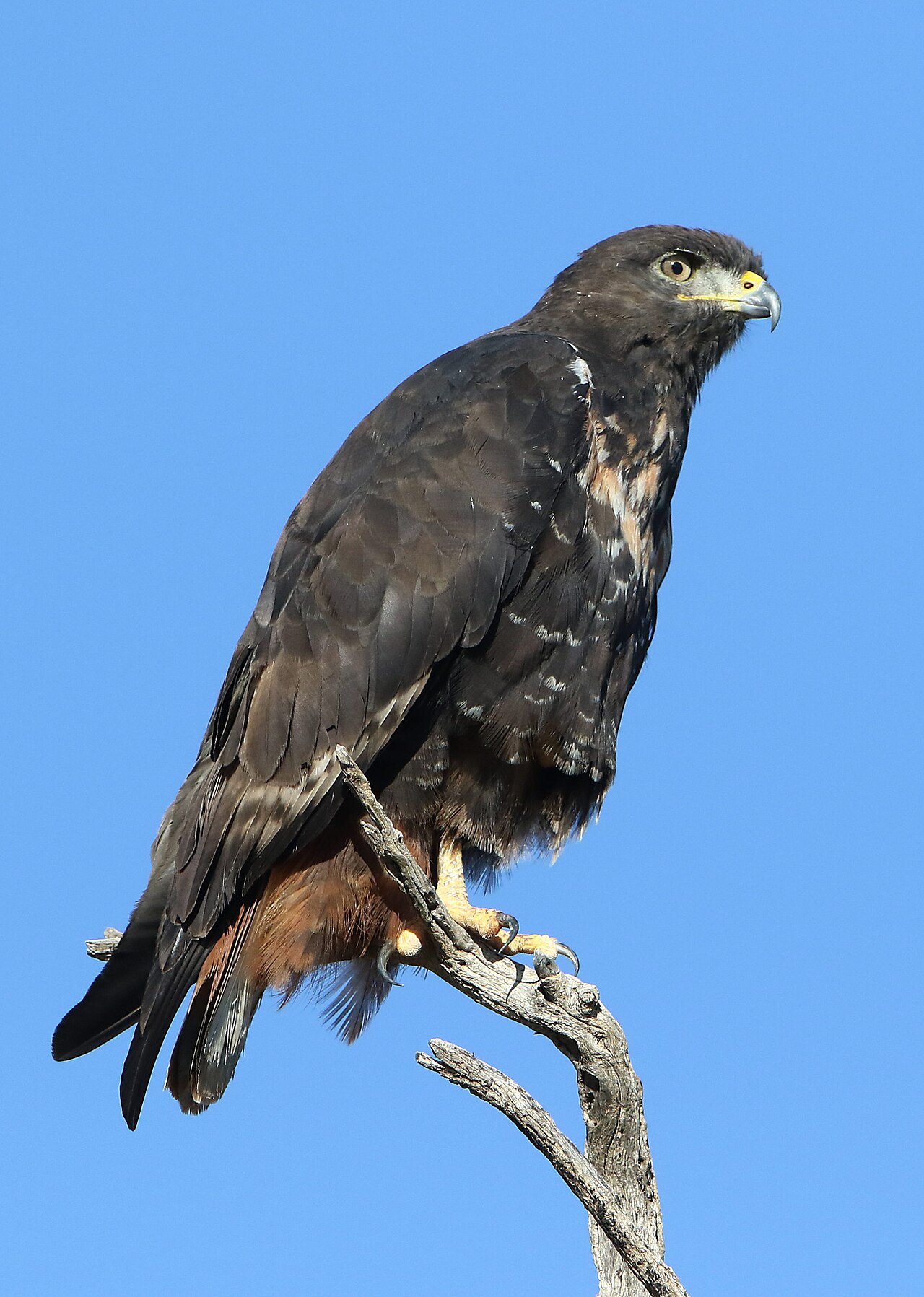
A jackal buzzard, often seen circling over the reserve. Photo: Derek Keats, CC BY 2.0, via Wikimedia Commons.
Do you love birds and flowers? Then also see our flowers and bird watching page.
Wildlife in Helderberg Nature Reserve
Keep your eyes open for the common duiker, a small antelope. Two hand-raised duikers, Rusk and Fritter, live in the lower reserve, so children often get a close look. Other residents include the Cape grey mongoose, the small-spotted genet, caracal and chacma baboons. A leopard has even been recorded on the mountain. However, it's very shy and rarely seen.
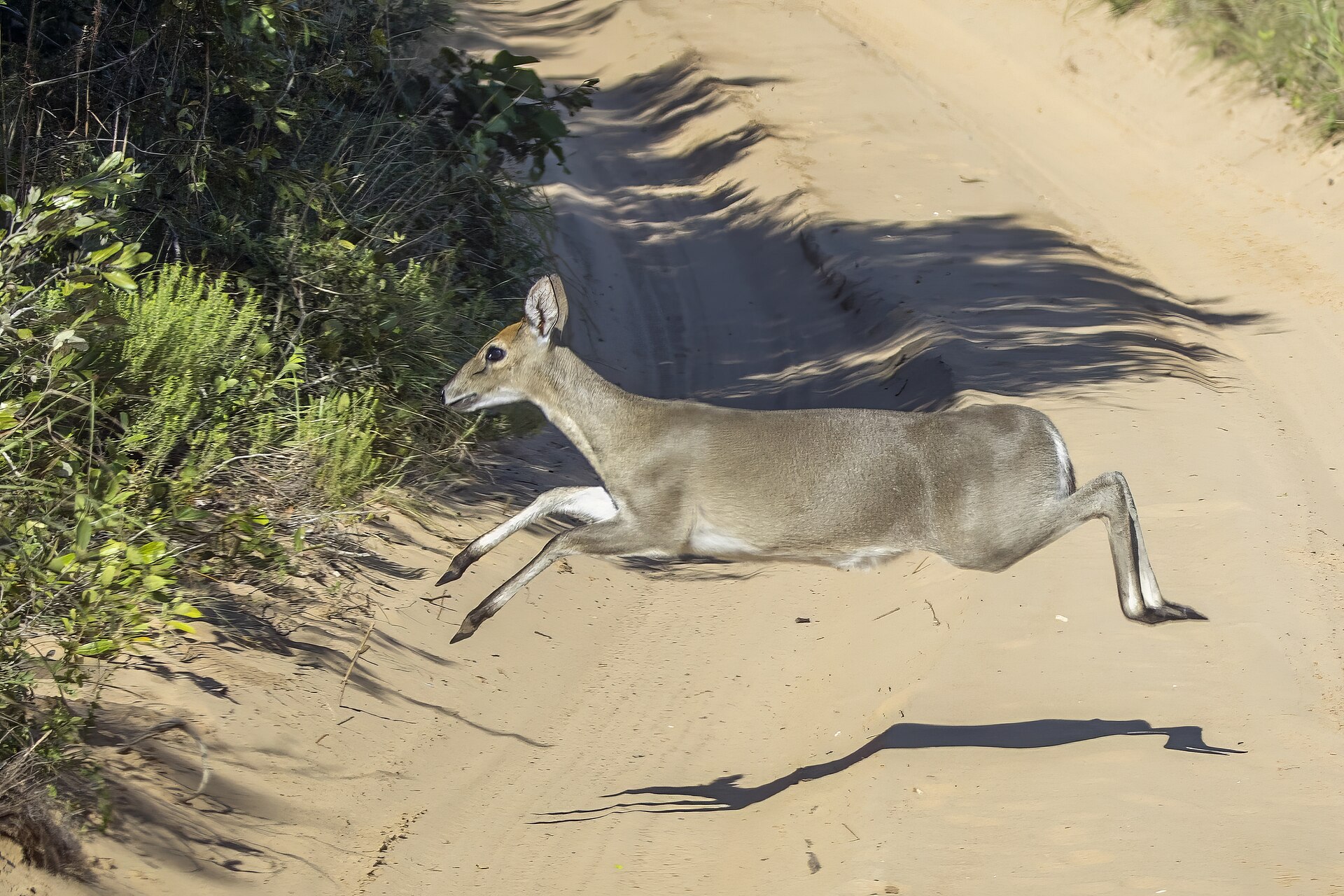
A common duiker. Photo: Charles J. Sharp, CC BY-SA 4.0, via Wikimedia Commons.
Picnics and the visitors centre
The lower reserve has shady lawns and a dam, so it's a lovely spot for a picnic. Bring your own basket, because the restaurant is closed until further notice. Braais, fires and gas burners are not allowed. There are also no bins, so please take your rubbish home. The visitors centre has a small gift shop and is open seven days a week. In the lower reserve, boardwalks give universal access, which is handy with a pram or wheelchair.
The Friends of the Helderberg Nature Reserve also organise guided walks, talks, Concerts in the Park and the Helderberg Book Festival. Travelling with children? See our things to do with kids in Somerset West.
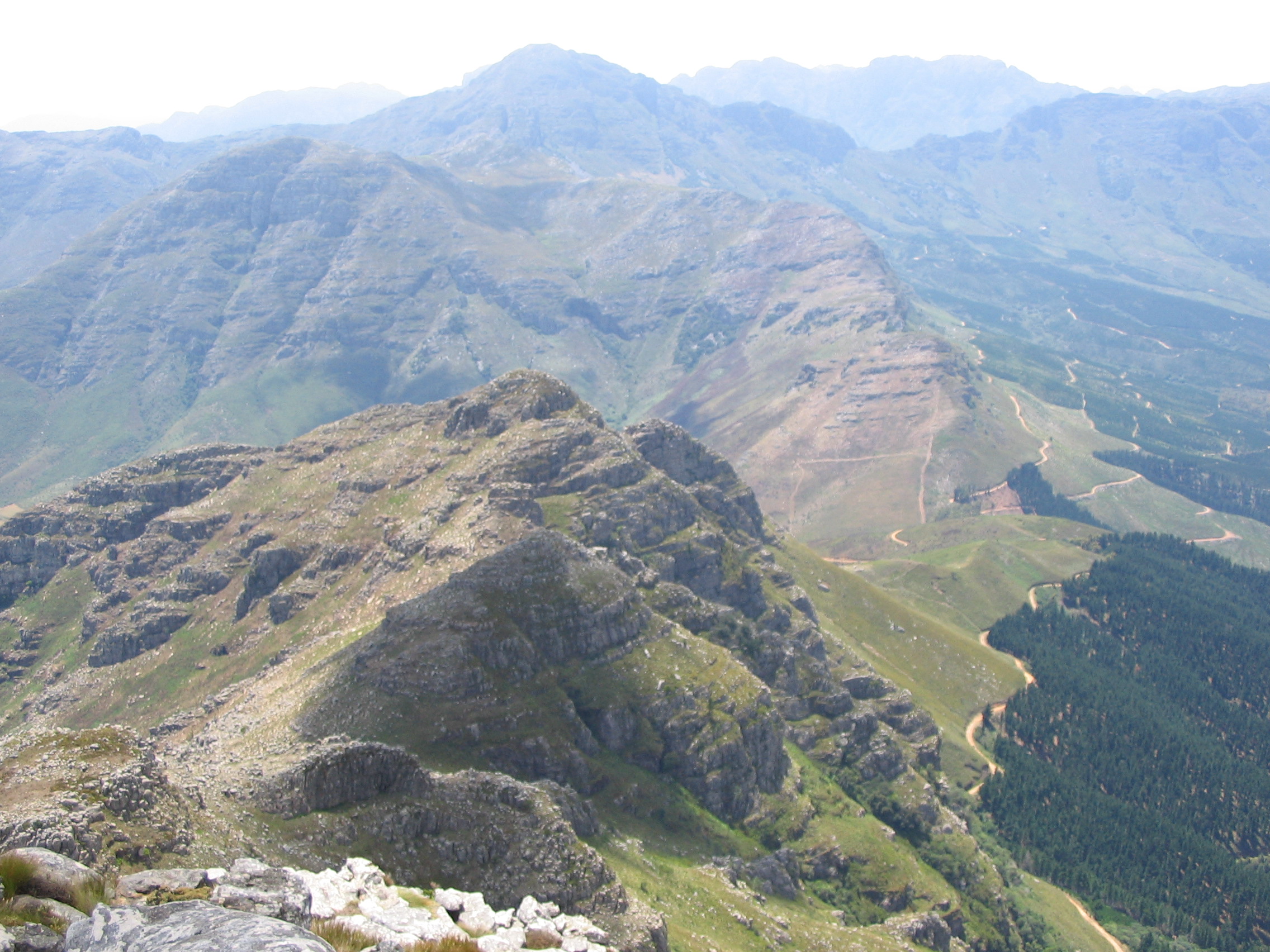
Fynbos slopes below the mountain. Photo: Abu Shawka, CC0, via Wikimedia Commons.
Tips for your visit
Before you set off
Wear good shoes and bring water, sun cream and a warm layer. The weather on the mountain changes fast. Don't hike alone on the longer trails. Dogs are not allowed, except service dogs. Go early in summer to avoid the heat, and remember the gates close at 17:30 in winter. In an emergency, call Wilderness Search and Rescue on 021 937 0300.
Our tip: start with the Sugarbird Walk at 07:30, when the birds are most active. Then come back to the villa for a late breakfast by the pool.
Frequently asked questions
How much does Helderberg Nature Reserve cost?
At the time of writing, R30 per adult, R20 per child (3 to 17), student or senior, plus R20 per vehicle. Under-3s go free.
What is the easiest trail in Helderberg Nature Reserve?
The Baboon Traverse (400 m) and the Sugarbird Walk (2.9 km) are both graded 1A, the easiest level.
Can I bring my dog?
No. Dogs are not allowed, except for service dogs.
Can I braai in the reserve?
No. Fires, braais and gas burners are not allowed, but picnics are welcome.
How far is it from Villa Helderberg?
It's about an 11-minute drive from the villa.