
Cape flowers are unlike anything else in the world. Giant king proteas, glowing pincushions, delicate ericas and the bright red disa all grow here, and most of them grow nowhere else. Better still, you don't need to travel far to see them. The Helderberg, right behind Villa Helderberg, is covered in fynbos, and some of the best gardens and reserves in the Cape are within an easy drive. In this guide we explain what makes Cape flowers so special, where to see them and which birds to look out for.
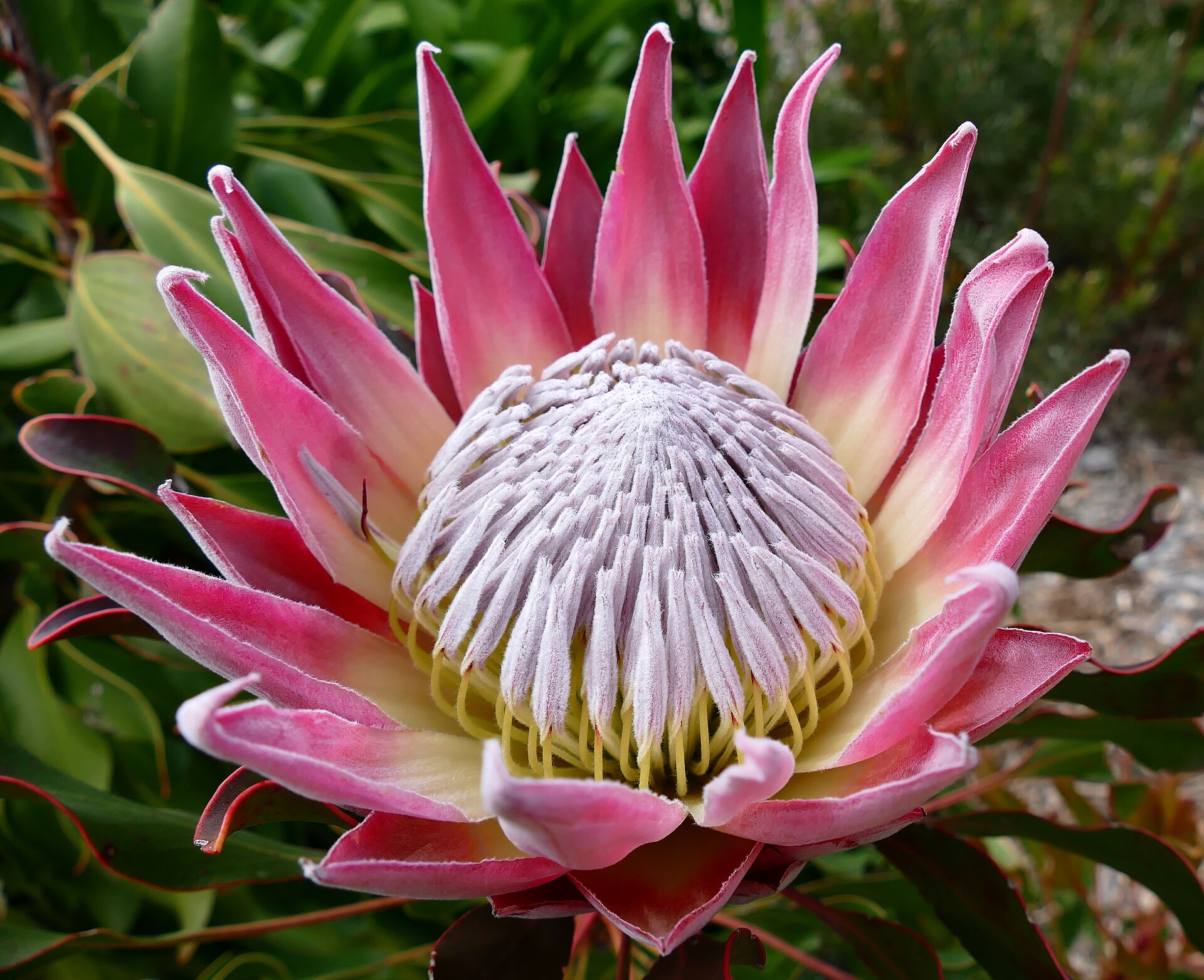
The king protea, South Africa's national flower. Photo: Bernard Dupont, CC BY-SA 2.0, via Wikimedia Commons.
Cape flowers and the Cape Floral Kingdom
Botanists divide the world into six floral kingdoms. The Cape Floral Kingdom is by far the smallest, yet it holds around 9,000 plant species, and most of them are found nowhere else on earth. Its protected areas are a UNESCO World Heritage Site.
The typical vegetation here is fynbos, from the Afrikaans for "fine bush". It's made up of three main plant families: proteas, ericas and reed-like restios. In addition, the region is home to many bulbs and orchids, such as the red disa. Fynbos needs fire to regenerate, so after a fire the slopes often burst into flower again.
Where to see Cape flowers near Somerset West
Helderberg Nature Reserve (about 10 minutes)
Start on our doorstep. The Helderberg Nature Reserve protects critically endangered fynbos and renosterveld on the slopes of the mountain. Easy boardwalks lead through the lower reserve, while trails climb higher for views over False Bay. At the time of writing, entry was R30 for adults, R20 for children and R20 per car. See the City of Cape Town for opening hours.
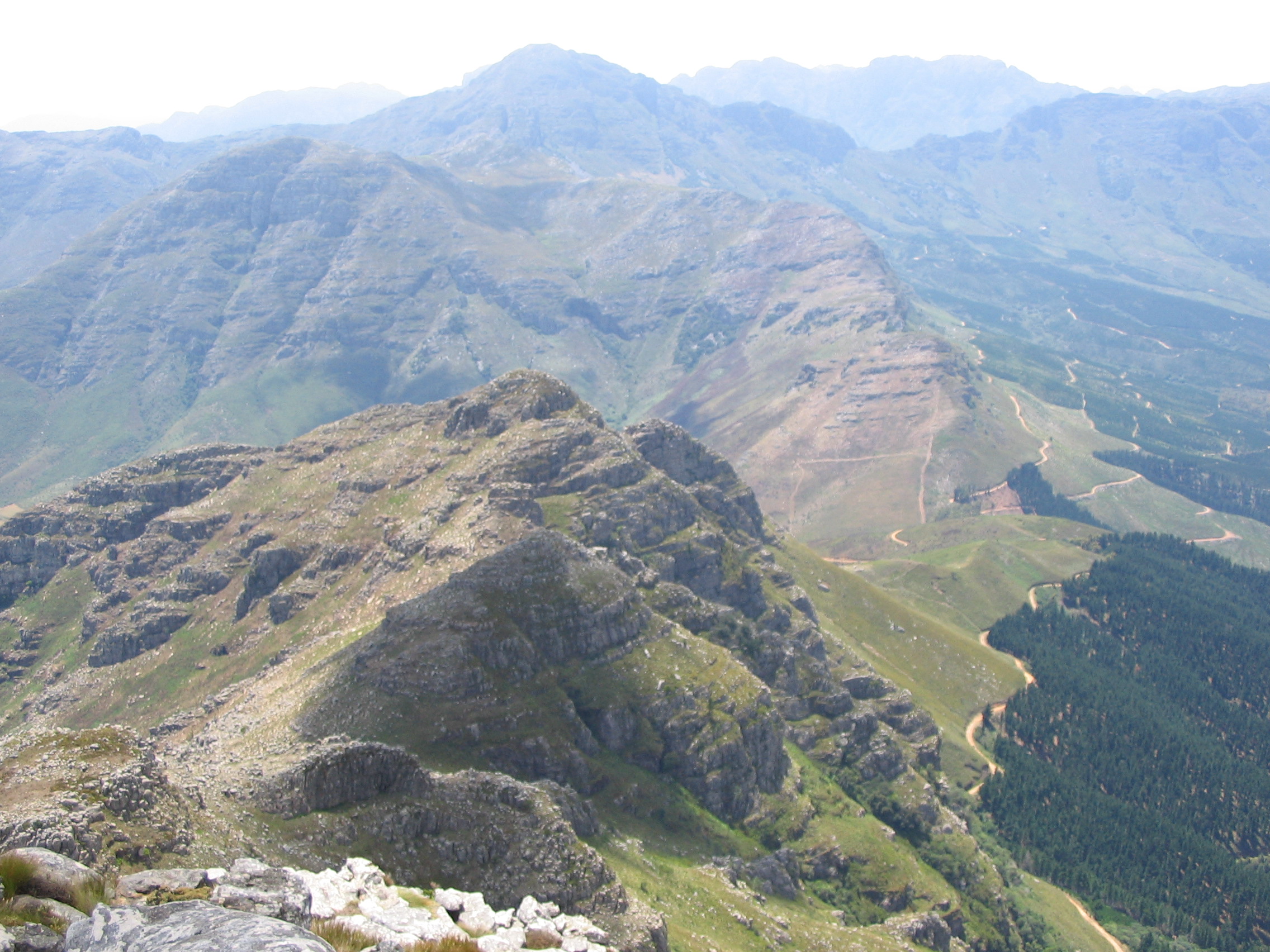
Fynbos in the Helderberg Nature Reserve. Photo: Abu Shawka, CC0, via Wikimedia Commons.
Harold Porter Botanical Garden (about 1 hour)
In Betty's Bay, between the mountains and the sea, this SANBI garden combines cultivated fynbos with wild kloofs, waterfalls and amber pools. Walk the Disa Kloof trail, and in late summer look for the red disa, the "Pride of Table Mountain", along the streams. The drive there along Clarence Drive is beautiful too. See Harold Porter for details.
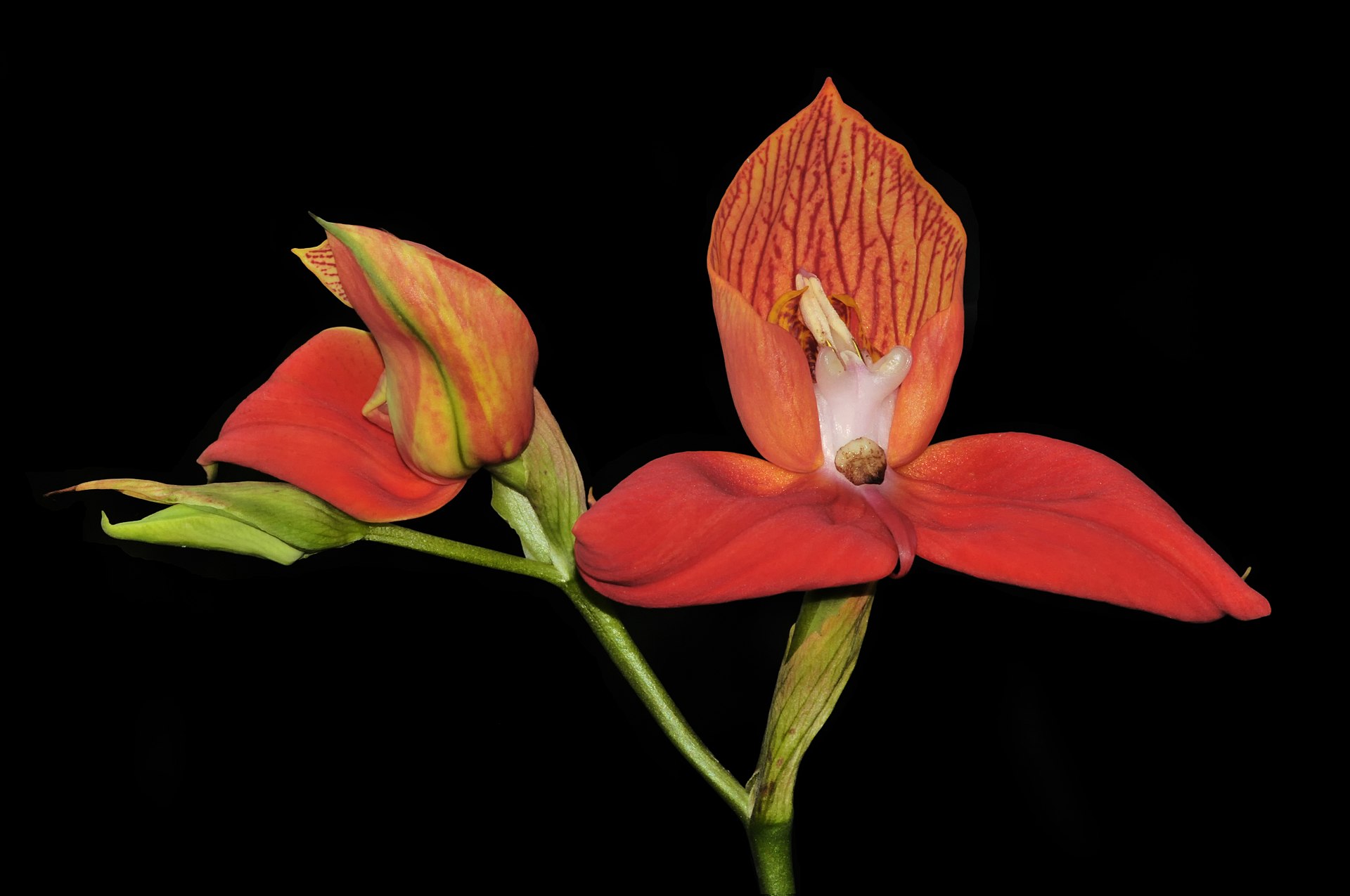
The red disa. Photo: Michael Gäbler, CC BY-SA 3.0, via Wikimedia Commons.
Kogelberg Nature Reserve (about 1 hour)
Kogelberg is often called the heart of the Cape Floral Kingdom. According to CapeNature, it has around 1,800 plant species, about 150 of which grow nowhere else. Hike into its wild valleys for the most varied fynbos in the region. See CapeNature for permits.
Kirstenbosch and Vergelegen
For a more manicured day, Kirstenbosch on the slopes of Table Mountain, about 40 minutes away, has a protea garden and the Tree Canopy Walkway. At the time of writing, tickets were R110 for South Africans and R270 for international visitors, sold online only. Closer to home, Vergelegen's historic gardens are lovely in spring, as we describe in our spring gardens guide.
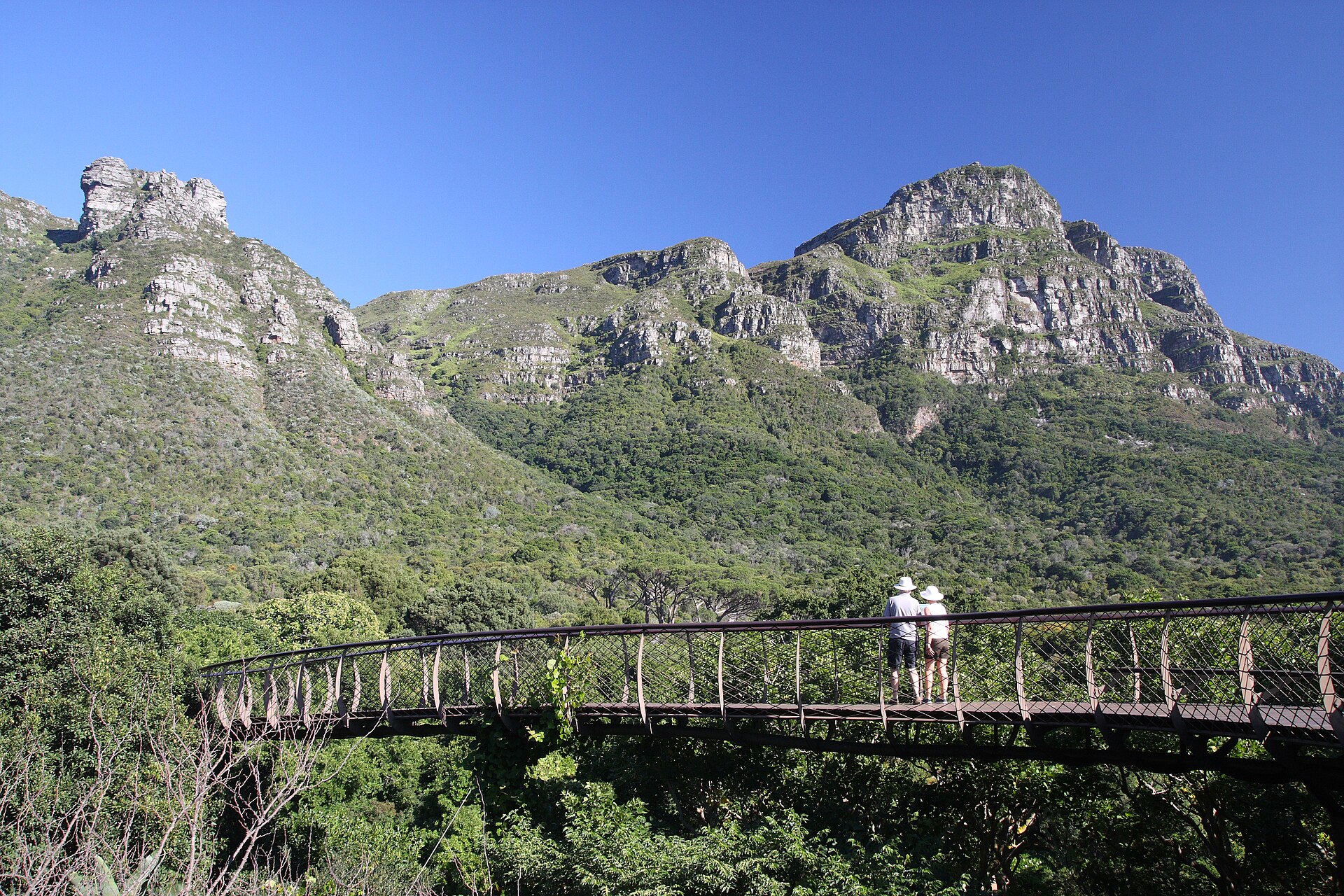
Kirstenbosch below Table Mountain. Photo: yeowatzup, CC BY 2.0, via Wikimedia Commons.
When do Cape flowers bloom?
Something is always in flower. Many proteas bloom from late autumn into spring, and that's when the sugarbirds are busiest. Pincushions and ericas brighten the mountains from late winter into early summer.
The most famous show, however, is the spring wildflower season on the West Coast and in Namaqualand. Usually in August and September, daisies turn whole fields orange, white and purple. It's a long day trip from Somerset West, so check flower reports before you go.
The birds of the fynbos
Where there are Cape flowers, there are birds. Several species live only in fynbos. The Cape sugarbird, with its long tail, feeds on protea nectar. The tiny orange-breasted sunbird loves ericas. And the Cape rockjumper hops between the rocks on the coastal slopes at Rooi-Els, about 45 minutes from the villa.
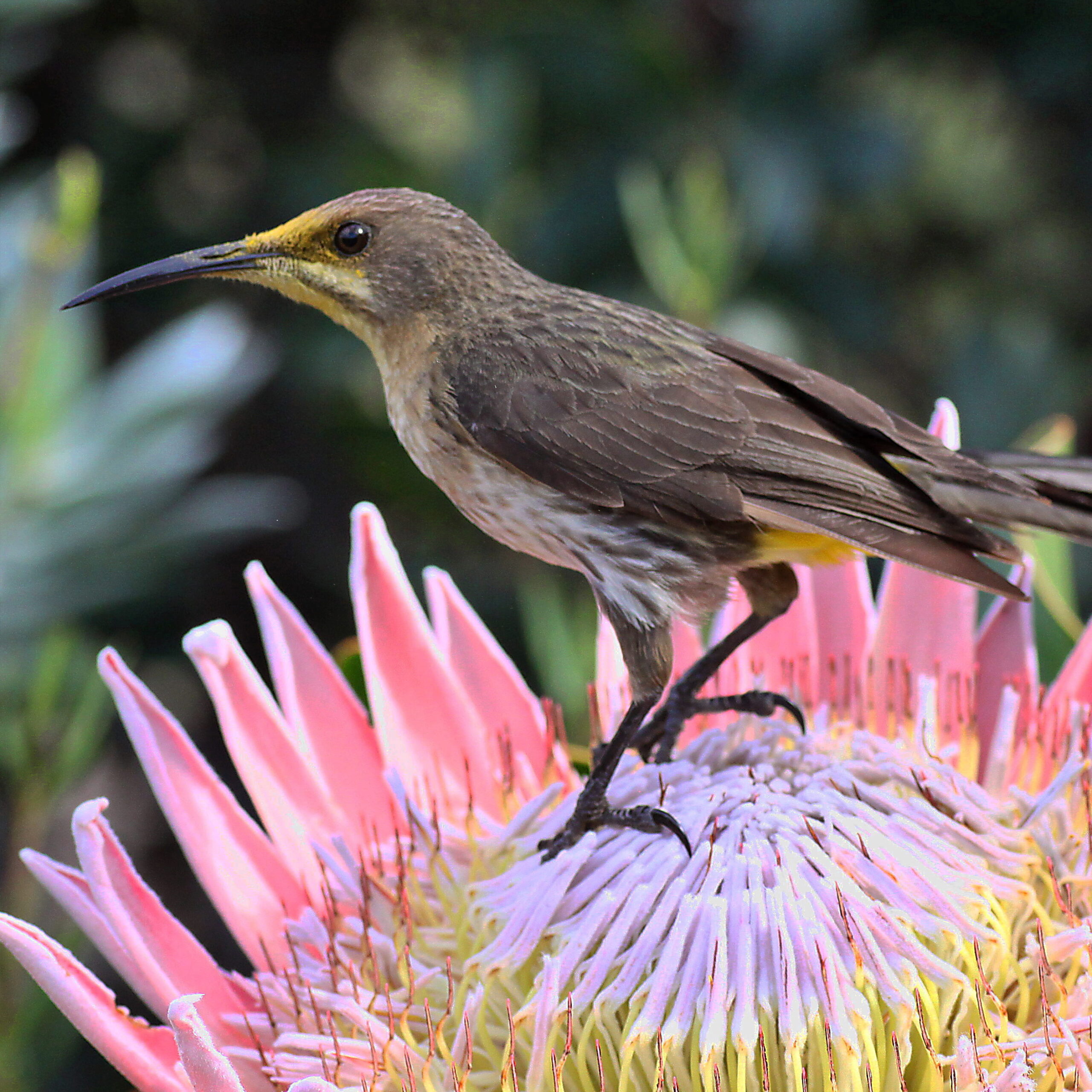
A Cape sugarbird on a king protea. Photo: Derek Keats, CC BY 2.0, via Wikimedia Commons.
For penguins, flamingos and more birding spots, see our page on Cape flowers and bird watching near Somerset West. It lists our favourite places with drive times, fees and tips.
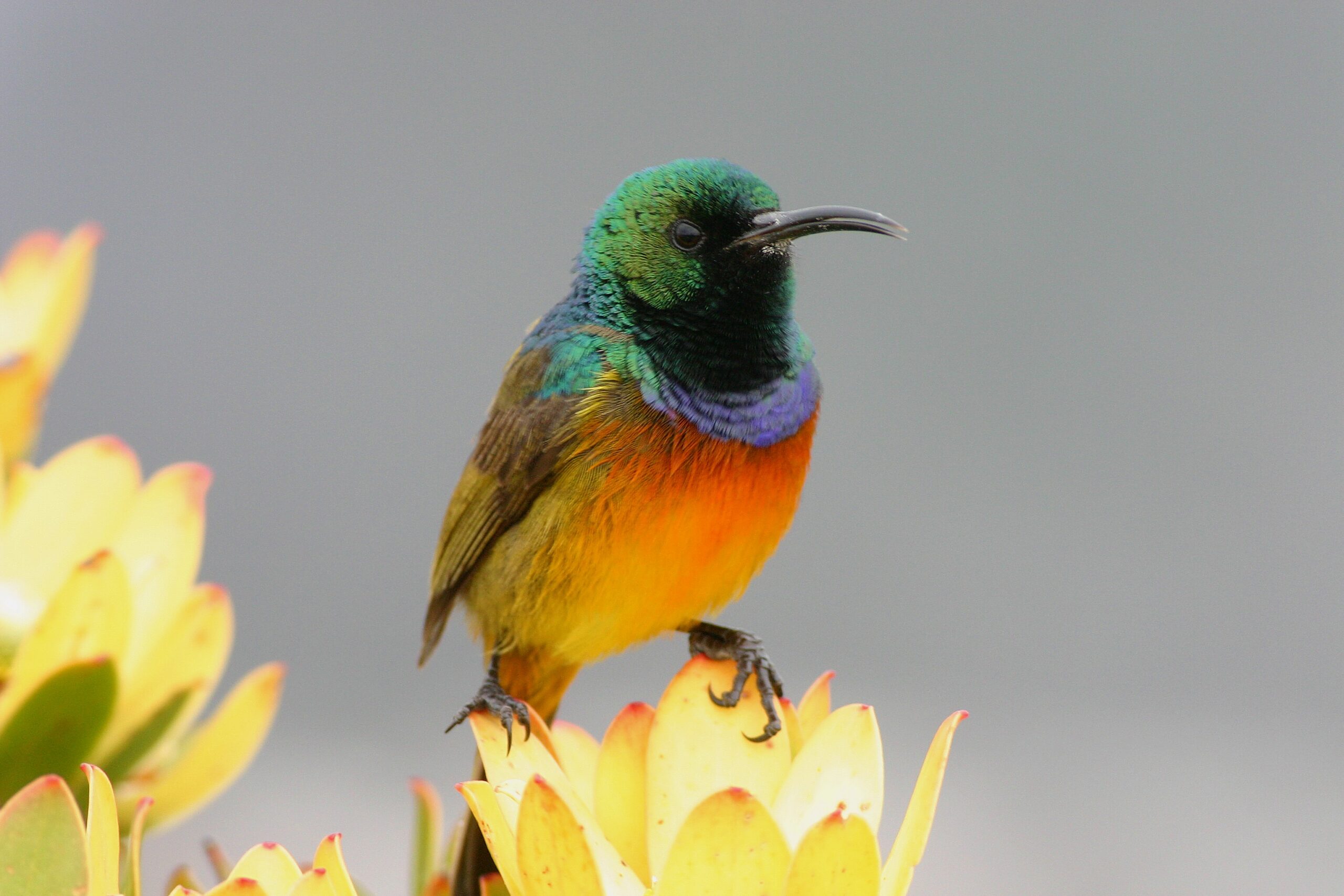
An orange-breasted sunbird. Photo: Ragnhild and Neil Crawford, CC BY-SA 2.0, via Wikimedia Commons.
Tips for flower and bird lovers
Before you go
Go early, when birds are most active and the wind is lighter. Bring binoculars, a hat and water, and wear sturdy shoes. Stay on the paths, and never pick flowers, because many species are protected. Want help? Ask us and we'll suggest the best spots that week or arrange a bird guide.
Combine your flower day with a walk from our best hikes in Somerset West guide, or make a coastal loop along Clarence Drive with lunch in Betty's Bay.
Frequently asked questions
Where can I see Cape flowers near Somerset West?
The Helderberg Nature Reserve is about 10 minutes from the villa. Harold Porter and Kogelberg are about an hour away, and Kirstenbosch about 40 minutes.
What is fynbos?
Fynbos is the natural vegetation of the Cape Floral Kingdom, made up mostly of proteas, ericas and restios.
When is the best time to see Cape flowers?
There's something in flower all year. Spring, from August to October, is the most colourful season overall.
Which birds can I see in the fynbos?
Look for the Cape sugarbird, orange-breasted sunbird and, at Rooi-Els, the Cape rockjumper.