
If you've already worked through the wine estates on our own doorstep (see our guide to the best wine estates near Somerset West), Franschhoek is the natural next stop: a French Huguenot village ringed by mountains, about 45 minutes away, with its own distinct food and wine culture. It's an easy full or half day out, and one of our most-asked-about day trips.
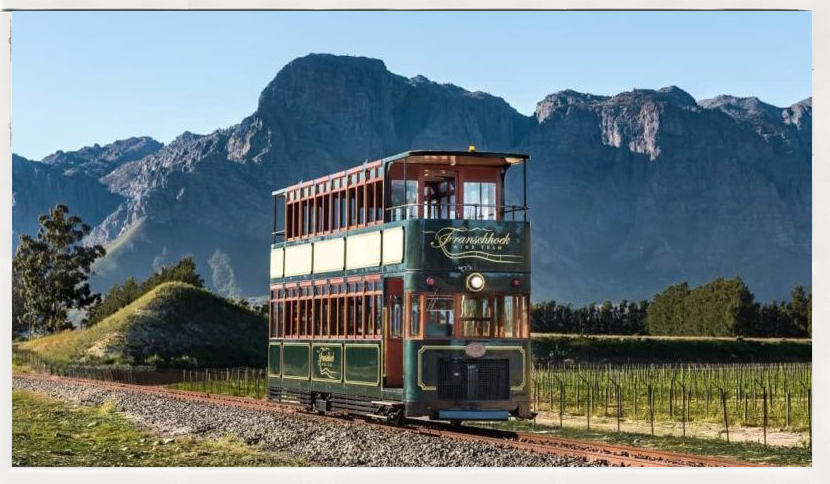
The Franschhoek Wine Tram. Photo: Franschhoek Wine Tram.
Getting there from Somerset West
The most direct route from the villa takes the R44 to Stellenbosch, then the R310 over the Helshoogte Pass and the R45 into Franschhoek: around 45 to 50 minutes without stops, longer if you linger on the way. A car gives you the most freedom here, since the village and surrounding estates are spread out enough that walking between them isn't realistic.
The Franschhoek Wine Tram
If you'd rather not drive between tastings, the Franschhoek Wine Tram is the village's signature experience: a hop-on, hop-off service using a vintage-style tram and open-air tram-buses, with five colour-coded lines covering around 30 wine estates across the valley. At the time of writing, tickets were about R350 for adults and R90 for children. The ticket covers transport only: tastings, lunch and activities at each estate are booked and paid for separately, so budget for those too. Check current prices and line schedules on the tram's own site before you go. It's a relaxed way to spend a day without worrying about who's driving.
Estates worth the stop
Franschhoek's estates lean more manicured and garden-focused than the wilder fynbos slopes around the Helderberg. Boschendal pairs a working farm and gardens with its popular restaurants, and Babylonstoren, on the road between Franschhoek and Paarl, is one of the Winelands' most photographed working gardens; both are stops on the wine tram's Orange Line. La Motte, just outside the village, combines tastings with a museum and walks on the estate. If spring gardens are your thing, our guide to the best spring gardens near Somerset West has more ideas closer to the villa.
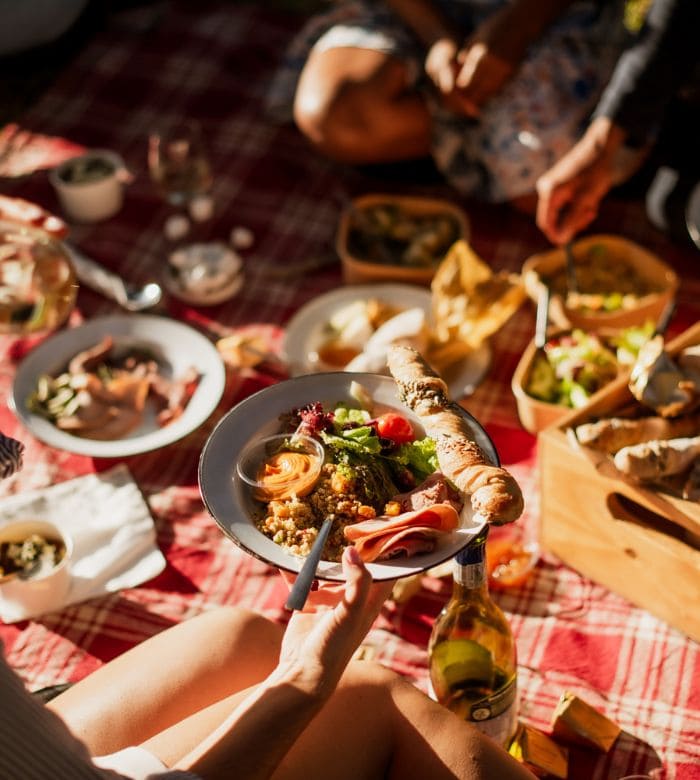
Picnics at Boschendal. Photo: Boschendal.
Lunch and the village itself
Franschhoek's main street is lined with restaurants and cafés, from casual bistros to some of the country's more celebrated fine-dining tables, so there's no need to book a specific estate for lunch unless you have a particular restaurant in mind: walking the main road and choosing on the day works just as well outside peak season. If you enjoyed our fine dining guide for Somerset West, Franschhoek is where to go to extend that experience for a day.
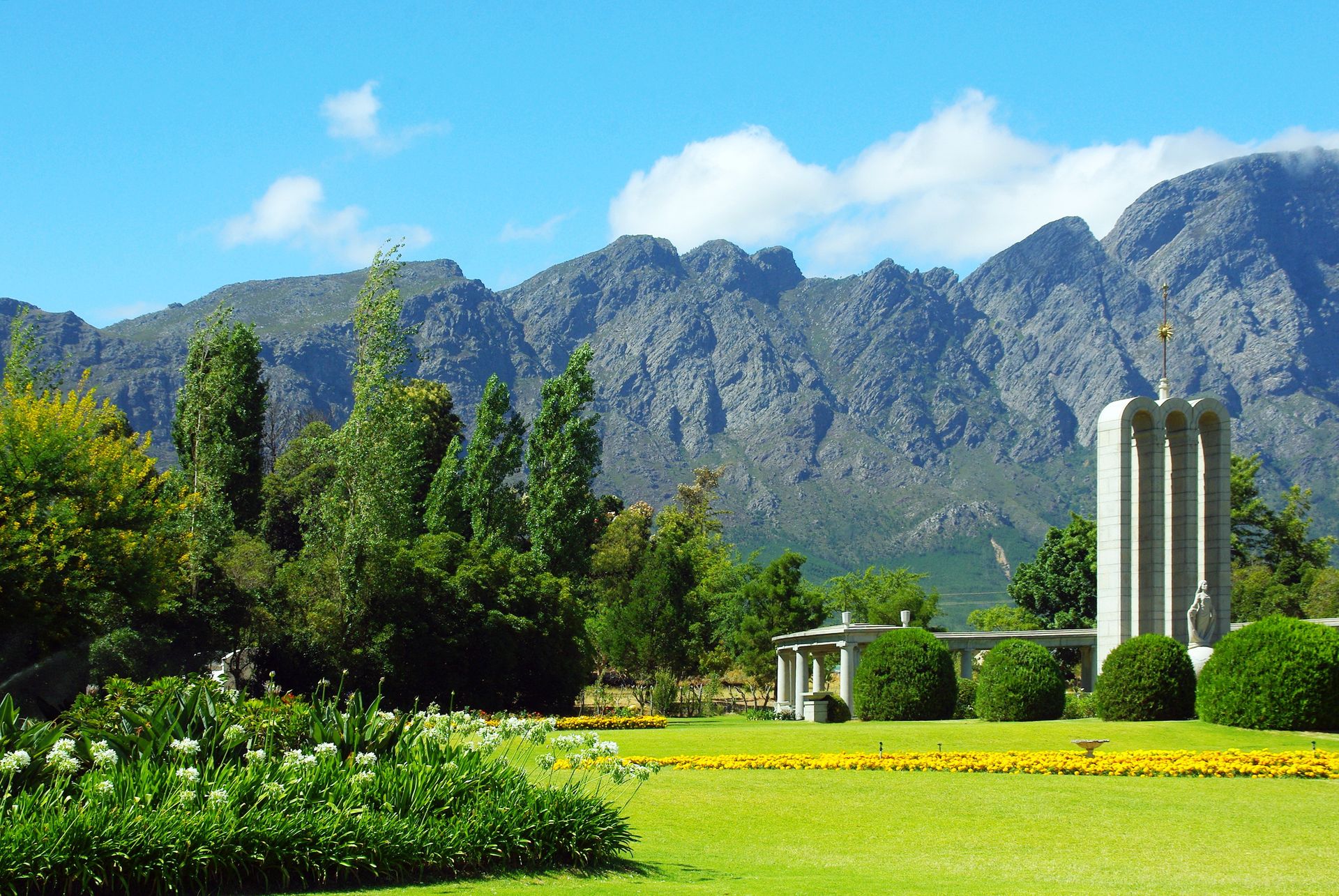
The Huguenot Monument, Franschhoek. Photo: Pixabay via Pexels.
Looping back via Stellenbosch
The road home runs back through Stellenbosch, which gives you the option of a last tasting, a wander through the historic town centre, or one of the weekend markets if your timing lines up with a Saturday. Wondering where to base yourself in the Winelands? Our comparison of Somerset West, Stellenbosch and Franschhoek lays out the options.
Tips for your visit
Book wine tram tickets ahead on busy weekends, especially in summer and over the harvest season. If you're tasting at several estates, pace yourselves or agree on a designated driver for the road home. Tasting fees vary by estate and are paid on top of the tram ticket, so budget a little extra if you plan to taste widely.
Frequently asked questions
How far is Franschhoek from Villa Helderberg?
About 45 to 50 minutes by car via Stellenbosch and the Helshoogte Pass, depending on traffic.
Do I need a car, or is the Wine Tram enough?
You can get around by Wine Tram once you're in Franschhoek, but you'll still need to drive (or arrange a transfer) to get there and back from Somerset West.
Is the Wine Tram worth it if I'm not a big wine drinker?
Yes. It's as much a scenic, relaxed way to see the valley and visit a few gardens, restaurants and estates as it is a tasting trip, and since tastings are paid for separately, you only pay for what you actually taste.
What's the best time of year to go?
Franschhoek is lovely most of the year; spring (September to November) and harvest season (February to April) are particularly good times to combine the gardens or the cellars with pleasant weather.