
Guests often ask us how to fit the Garden Route and a Big Five safari into a single week. It can be done, as long as you're happy to spend some of the week behind the wheel. This 7-day itinerary starts and ends at Villa Helderberg, follows the coast east past Hermanus and Plettenberg Bay to Addo Elephant National Park, and comes back inland through the Klein Karoo and Oudtshoorn. Here is how we would plan it, day by day.
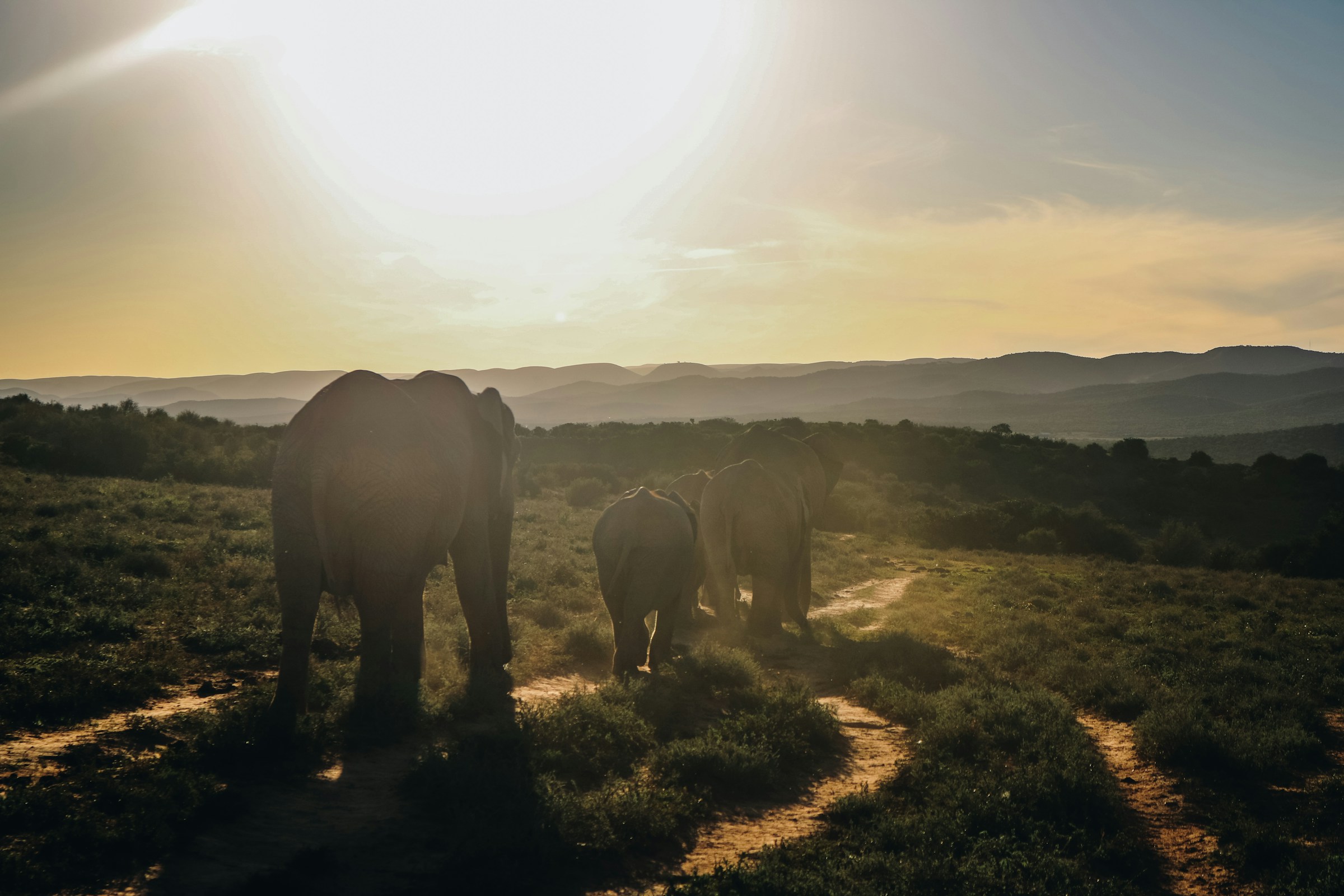
Elephants at sunset in Addo Elephant National Park. Photo: Hanne Neijland via Unsplash.
The route at a glance
The loop covers roughly 1,700 kilometres. The longest driving days are Hermanus to Plettenberg Bay (about 445 kilometres, five and a half hours), Addo to Oudtshoorn (about 400 kilometres, five hours) and Oudtshoorn back to Somerset West (about 400 kilometres, five hours). In return you get whales, beaches, one of the Cape's best coastal hikes, two nights in elephant country and the Klein Karoo, all in a week. We've kept the safari at the centre: you arrive in Addo on day 4 and leave on day 6, which gives you three separate game-viewing sessions across two nights. If you can add an extra night anywhere, add it in Addo or Plett.
Day 1: Villa Helderberg
Start slowly. If you're flying in, Villa Helderberg is an easy drive from the airport (see our guide to getting from Cape Town airport to Somerset West). Pick up your hire car, settle in, and spend the afternoon at one of the wine estates on our doorstep before an early night. You've got a big week ahead.
Day 2: Hermanus whale watching
Take Clarence Drive (the R44) out of Gordon's Bay. It's one of the most beautiful coastal roads in the country, and it passes the hidden beaches in our guide to Kogel Bay and Dappat se Gat. Allow around an hour and a half to Hermanus with stops. Southern right whales come into Walker Bay to mate and calve from about June to November, and the busiest months are usually September and October. The town's cliff path runs for around 11 to 12 kilometres along the shore, with benches and lookouts all the way. Gearing's Point, above the Old Harbour, is the classic spot, and in season you may hear the whale crier's kelp horn announcing a sighting. If you'd like to get closer, licensed boat trips leave from the New Harbour. Stay the night in Hermanus so you can start the long drive east early.
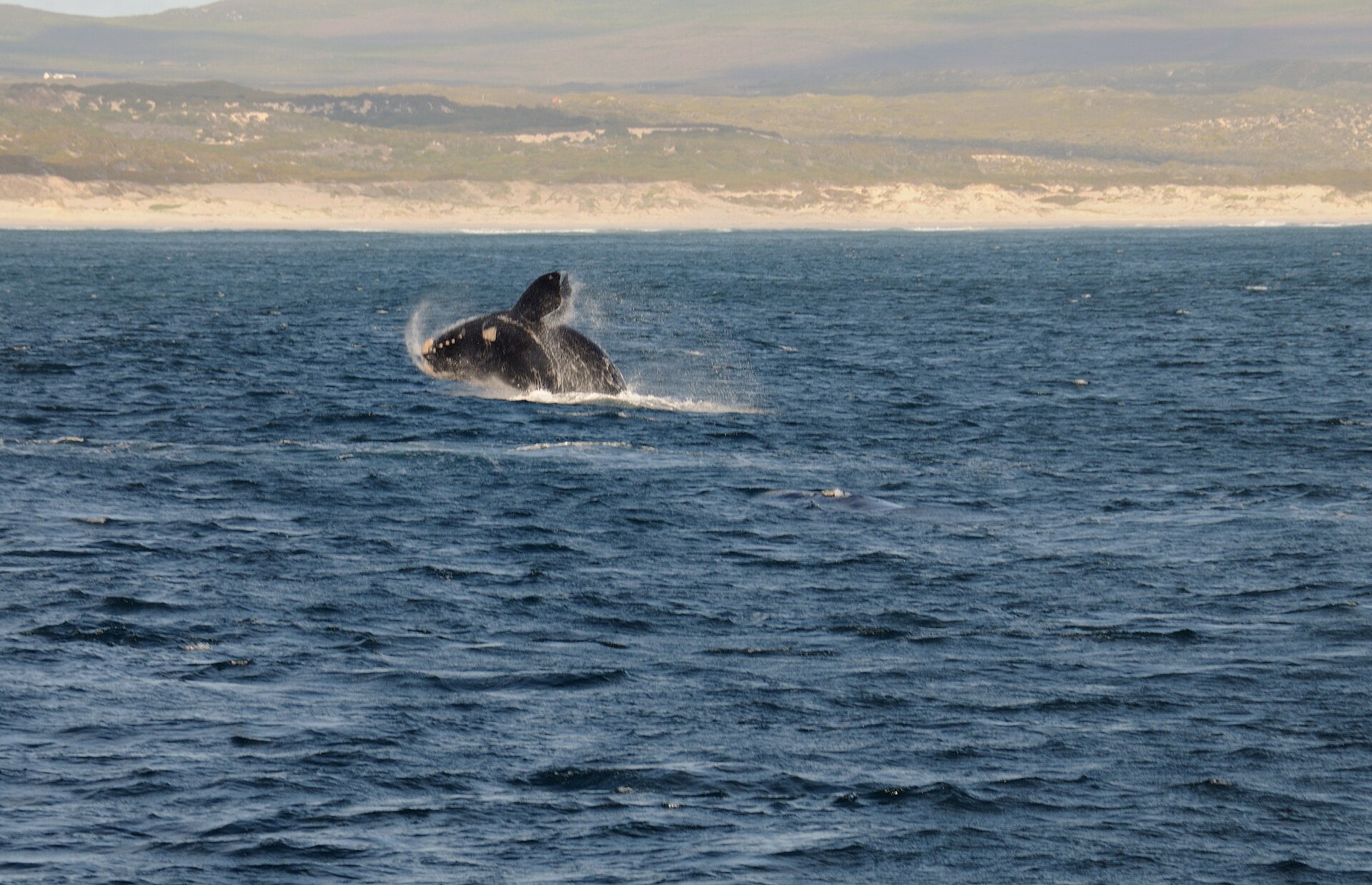
A southern right whale breaching near Hermanus. Photo: Josep M. Gracia via Wikimedia Commons, CC BY-SA 4.0.
Day 3: On to Plettenberg Bay
This is the longest day on the road: about 445 kilometres along the N2, or roughly five and a half hours of driving. Leave early, break the drive for coffee and lunch, and aim to reach Plettenberg Bay by mid-afternoon. Then head straight for the sand. Central Beach, Lookout Beach and the long sweep of Robberg Beach are all close to town. A late-afternoon walk with the Robberg peninsula glowing at the end of the bay is the perfect reward for a day in the car.
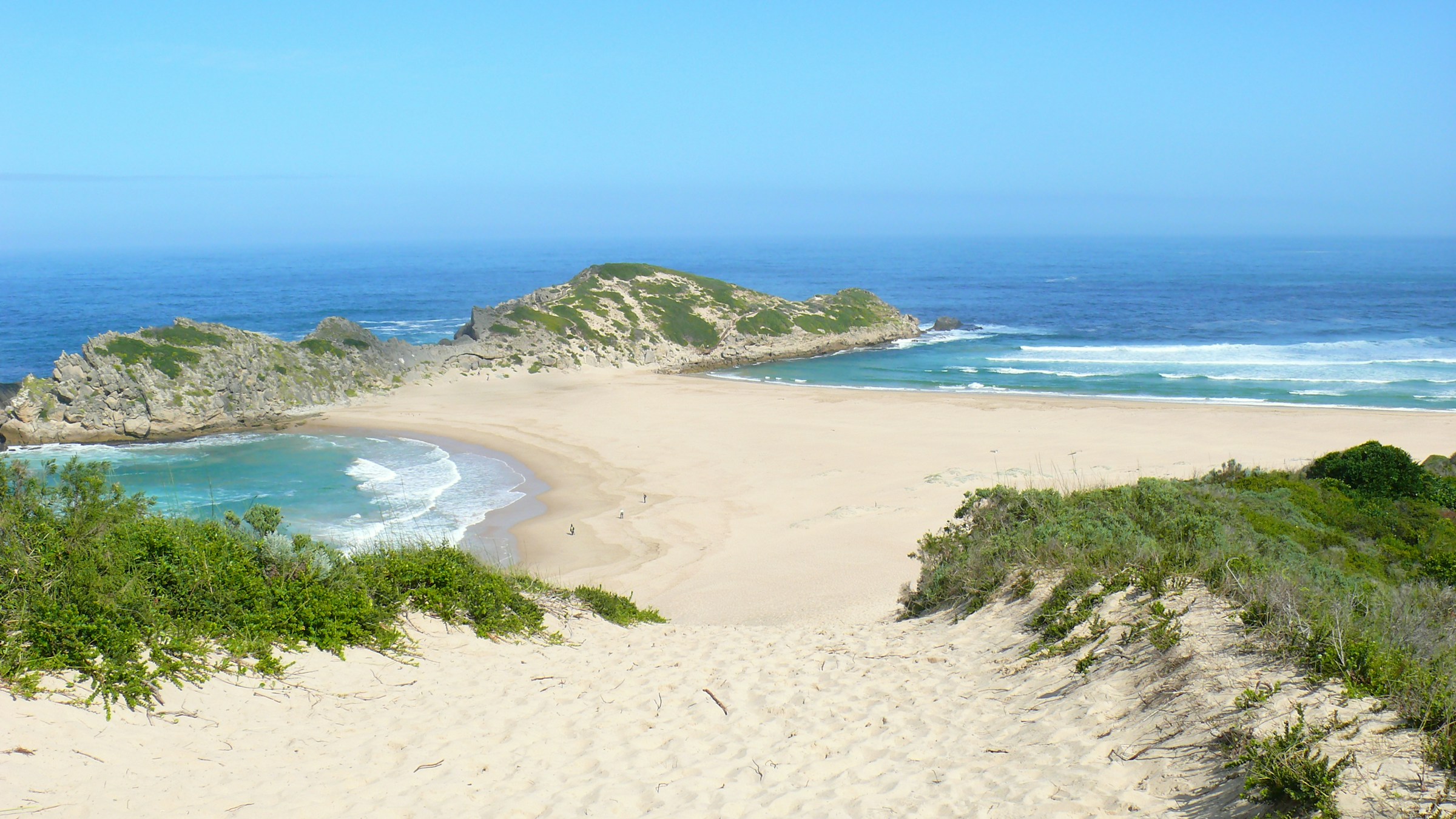
Turquoise water at Robberg, Plettenberg Bay. Photo: Marco Gargo via Unsplash.
Day 4: Robberg, then Addo
Be at the gate of Robberg Nature Reserve when it opens. CapeNature lists three circular trails: the Gap Circuit (2.1 kilometres), the Witsand Circuit (5.5 kilometres, about two hours) and the Point Circuit (9.2 kilometres, about four hours). On a travel day, the Witsand Circuit is the sweet spot. It gives you cliff-top views, the seal colony and the sand bridge to The Island without eating the whole day. There are no water points on the trails, so carry your own. After the hike, drive east to Addo Elephant National Park, about three hours away. Check in by late afternoon and join a guided sunset drive, or simply watch the floodlit waterhole at Main Camp after dark.
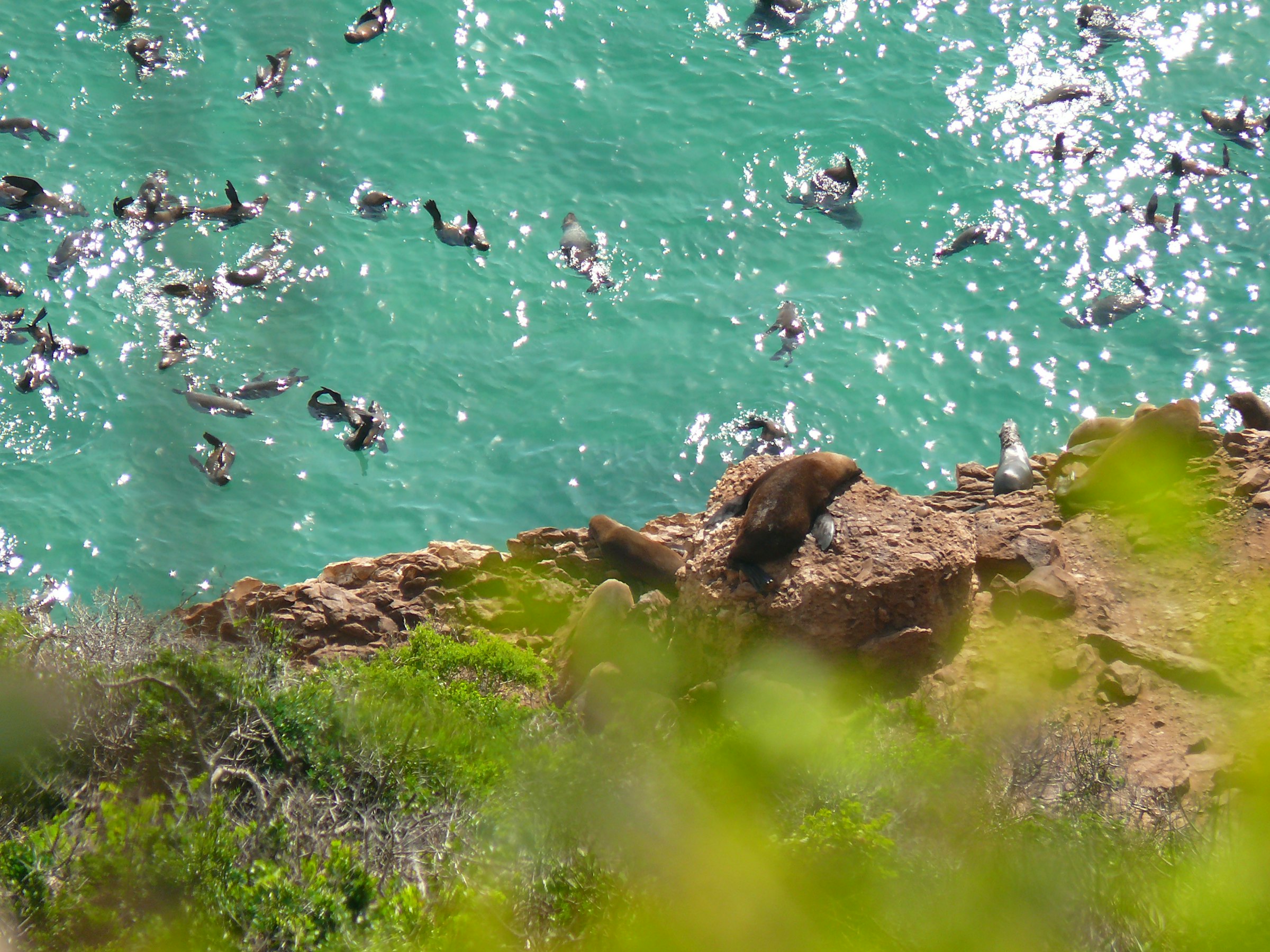
Cape fur seals below the Robberg trail. Photo: Marco Gargo via Unsplash.
Day 5: A full safari day in Addo
Addo is famous for its elephants, with herds of several hundred in the park, and it is also home to lion, buffalo, rhino and leopard, as well as kudu, zebra and warthog. It's also malaria-free, which makes it an easy choice for families. You can explore in your own car (the main roads are tarred, most others are gravel) or book a guided drive in an open vehicle. According to SANParks, guided drives last about two hours and leave from Main Camp reception at set times through the day. Children under six can't join them. Our favourite plan is a guided morning drive, a slow lunch at camp, then an afternoon self-drive to the waterholes, where elephants gather in the heat.
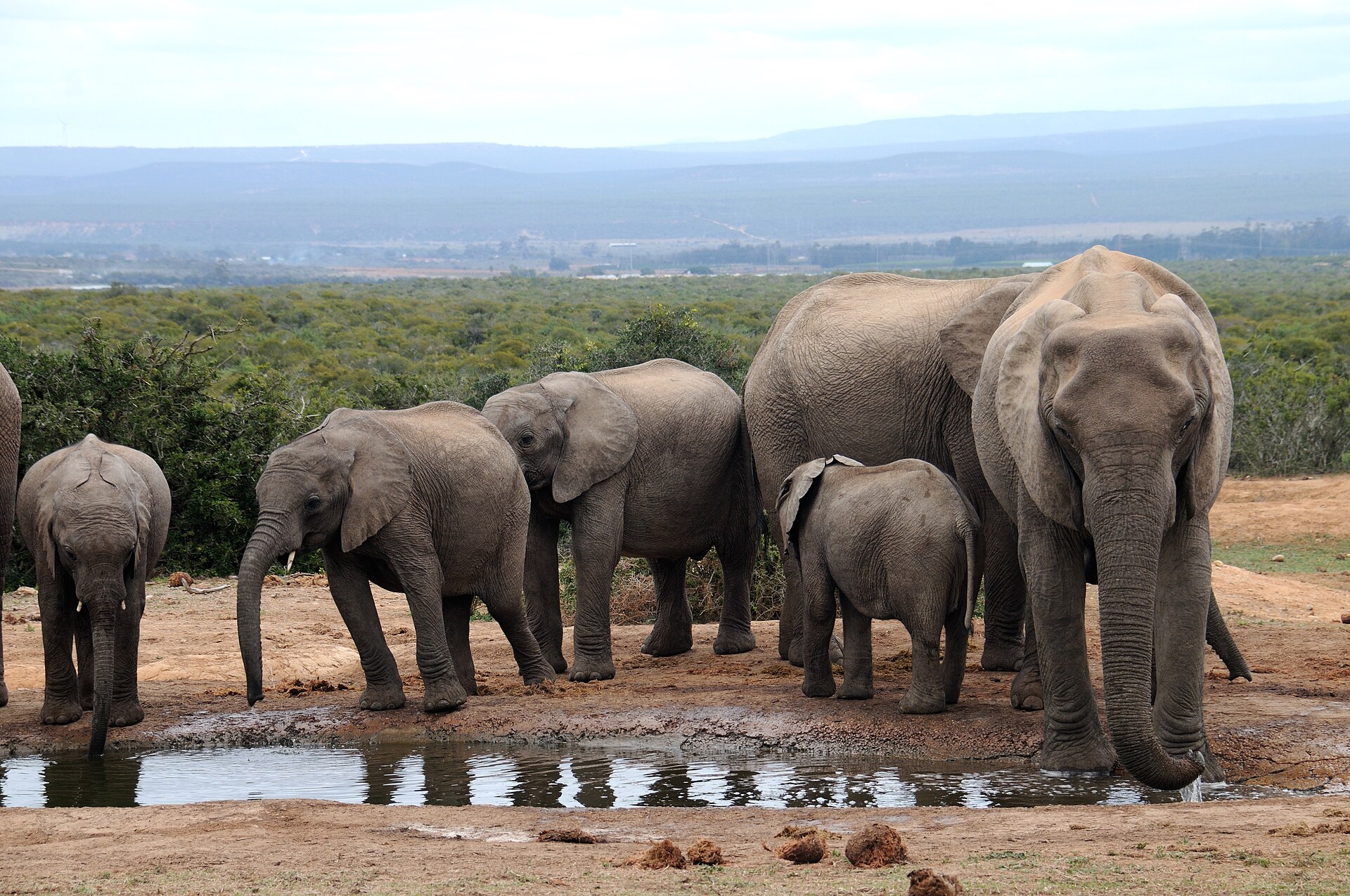
Elephants at a waterhole in Addo. Photo: Josep M. Gracia via Wikimedia Commons, CC BY-SA 4.0.
Day 6: Sunrise drive, then Oudtshoorn
Book the sunrise drive for your last morning. The light is soft, the air is cool and the animals are active. After breakfast, head west to Oudtshoorn, about 400 kilometres or five hours away. The inland route through the Langkloof valley makes a pleasant change from the coast. Oudtshoorn sits in the Klein Karoo, a dry, open landscape that feels a world away from Plett's beaches. Arrive in time for dinner, and try ostrich steak if you're curious.
Day 7: Cango Caves, ostriches and home
Start at the Cango Caves, about 30 kilometres north of Oudtshoorn in the foothills of the Swartberg mountains. Two tours are on offer. The Heritage Tour takes about an hour through the great show chambers. The Adventure Tour takes about 90 minutes and involves crawling and squeezing through narrow passages, so it's only for the fit and not for anyone claustrophobic. Book online ahead, especially in school holidays.
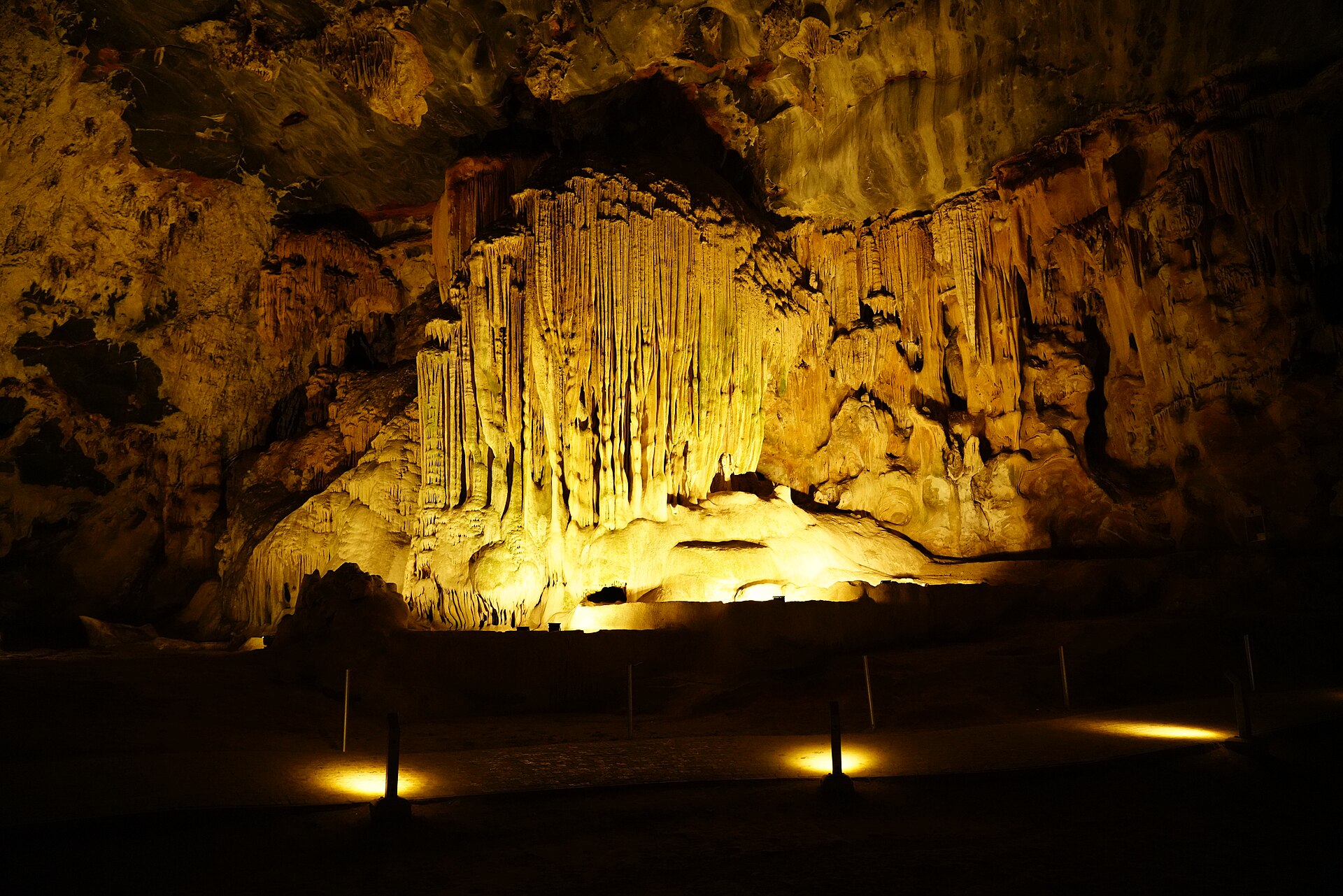
Inside the Cango Caves. Photo: Satdeep Gill via Wikimedia Commons, CC BY-SA 4.0.
On the way back into town, stop at one of the ostrich show farms. Highgate Ostrich Show Farm, which opened to visitors in 1938, is the best known, and Safari Ostrich Farm and Cango Ostrich Farm are good alternatives. Tours explain how the birds are farmed and usually let you feed them by hand. Some farms have stopped offering ostrich rides on welfare grounds, and we'd suggest skipping rides even where they're offered. Leave Oudtshoorn by early afternoon for the drive back to Villa Helderberg, about five hours via Route 62 or the N2.
Tips for the road trip
Book Addo accommodation and guided drives well in advance, as SANParks camps fill up quickly in school holidays. Pay conservation fees at the gate (or check current fees on the SANParks and CapeNature sites before you go), and keep fuel topped up in the Karoo, where towns are far apart. Avoid driving after dark on rural roads, where animals and unlit vehicles are a real risk. If seven days feels rushed, add a night in Plett or Addo, or finish with an extra night back at the villa to unwind. For a closer safari option on a shorter stay, see our guide to safaris near Somerset West.
Frequently asked questions
Is 7 days enough for the Garden Route and Addo?
Yes, if you don't mind three long driving days. This itinerary covers the highlights at a brisk pace. With eight or nine days you could add a second night in Plettenberg Bay or a third in Addo and travel more slowly.
When is the best time of year for this itinerary?
September to November is ideal. Whales are in Walker Bay, spring weather is mild, and it's before the December holiday crowds. Addo and Oudtshoorn can be very hot in midsummer.
Do I need a 4x4 for Addo?
No. The main roads in Addo are tarred and the gravel roads are fine for an ordinary car in normal conditions. A higher vehicle does help with seeing over the bush.
Is Addo malaria-free?
Yes. That's one of the reasons it's so popular with families. Remember that children under six can't join SANParks' guided game drives, so plan on self-driving with young kids.
Which Cango Caves tour should I choose?
Choose the Heritage Tour if you want the impressive chambers without any crawling. Choose the Adventure Tour only if you're fit, flexible and comfortable in tight spaces.